
Since its inauguration on September 19, 1999, the Circuit de la Comunitat Valenciana Ricardo Tormo has become an iconic venue. A commitment to sport that has positioned the Comunitat as a benchmark in the world of motorsport.
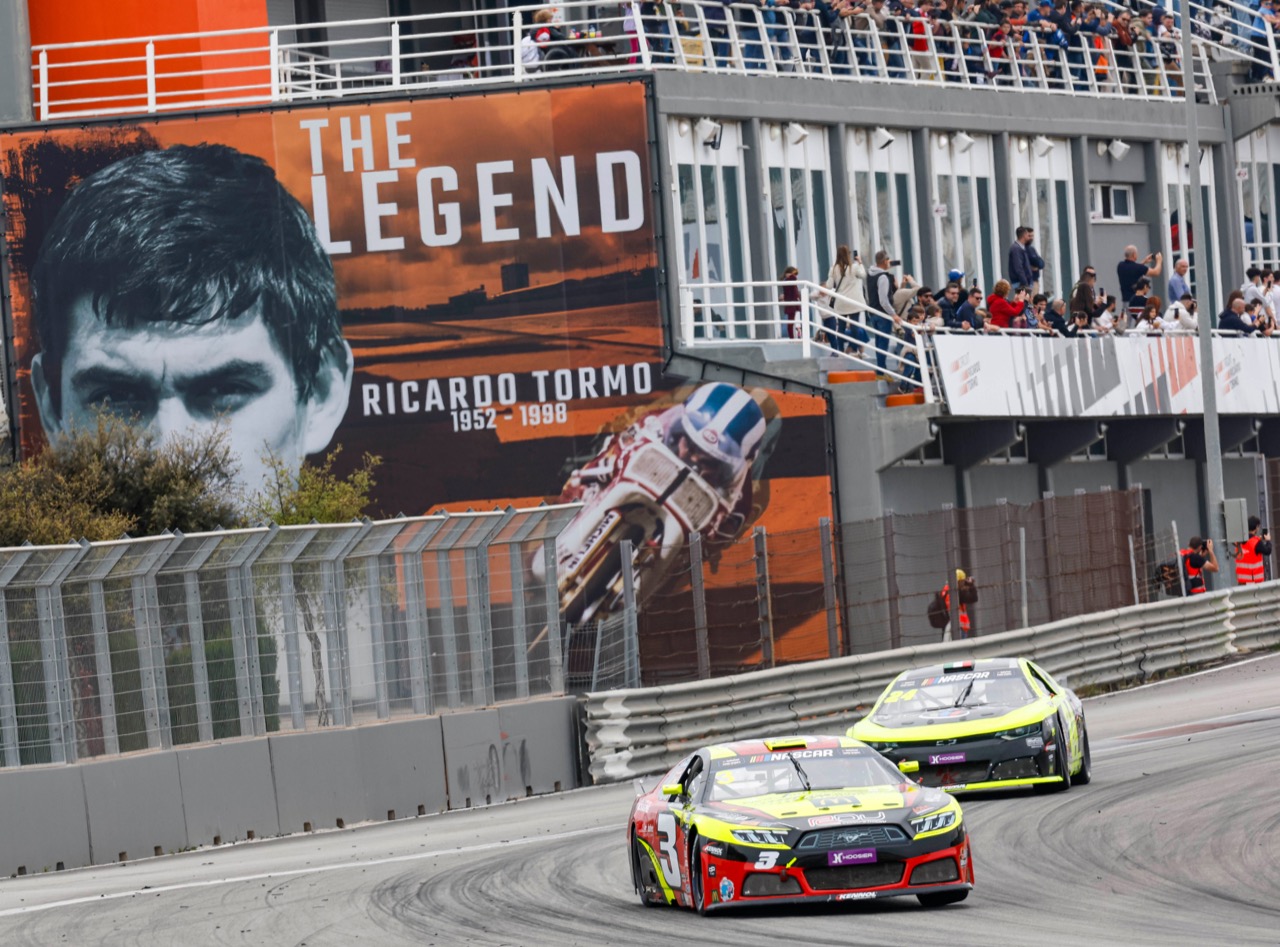
Throughout its history it has received numerous awards that place it among the best circuits on the current scene. It has been recognised on different occasions as the best organiser in the most important motorsport competitions: six awards in the Motorcycle World Championship (IRTA BEST GRAND PRIX in 2003, 2004, 2006, two in 2020 and 2021), two for organising the Superbike World Championship (2000 and 2006) and one for Best Truck Grand Prix in 2001.
A circuit within a stadium reflects the Circuit’s concept, built so that spectators can see the entire event unfold. From the 65,000 seats in the grandstands you can see the whole track, a feature that lets you follow the races without missing a thing on the circuit.
The challenging track layout and excellent facilities have made the Circuit a hub for motorsports; between events, practice sessions, and various activities, it achieves a 95% occupancy rate throughout the year. In addition to the MotoGP World Championship, it has hosted the two most important touring car races— the FIA WTCC World Touring Car Championship—which has been renamed the FIA TCR World Tour—and the German DTM Touring Car Championship, as well as Formula 3 and GT races, the MotoJunior series (a stepping stone to the World Motorcycle Championship), Formula 1 teams’ preseason tests, a race from the Formula E World Championship, and many other events.
Every year, the Valencia circuit closes out the MotoGP season with an event that has become a highlight for the more than 100,000 fans who fill the stands, and one that riders enjoy due to the track’s technical characteristics.
In short, it is a facility at the service of Valencia’s large motorcycle fan base and, throughout its history, it has welcomed more than four and a half million visitors. A figure that shows the project was the right call.
But the Generalitat’s ambition offers broader prospects. Ricardo Tormo aims to establish itself as a driving force. It is not just a racing circuit. It is a meeting point, a place to get together and, above all, to have fun with friends and family. That’s why the Circuit’s management prepares complementary activities at every event, so fans can take part and enjoy themselves.
In this way, the Circuit goes beyond competitions to become a leisure space for fans. This initiative has brought the circuit closer to Valencian society, which sees the venue as a place for group leisure, with a wide range of activities to watch and to take part in.
Sports promotion
The construction of the Circuit de la Comunitat Valenciana Ricardo Tormo was not only a response to the demands of Valencia’s motorcyclists. The Generalitat created a sports project with the aim of training young riders. The Cuna de Campeones for motorbikes and the Fórmula de Campeones de Karting provide the first opportunity for children to compete on motorbikes and karts.
Once the learning process has been completed across different categories, vehicles and competitions, the pyramid is topped off by Valencian riders in Motorcycle World Championship teams, such as Héctor Faubel, Sergio Gadea, Héctor Barberá, Nico Terol, Adrián Martín… all of them developed through this project. Likewise, in car racing, already in single-seaters are Adrián Vallés, Félix Porteiro, Borja García, Sergio Hernández, Marco Barba, Roberto Merhi and Álvaro Barba.
All of them are following in Fernando Alonso’s footsteps, as he was linked to the Circuit for two years during his training. All are candidates to achieve one of the goals the Generalitat set with this school: a Valencian driver in Formula 1. A goal achieved by Roberto Merhi from Castellón, who in March 2015 was the official driver for the small Manor F1 team.